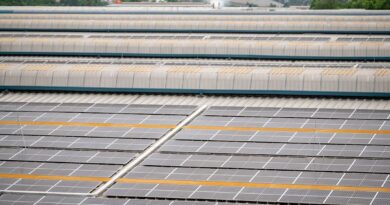

Mahindra to Procure Power from 30 MW Captive Solar Project
⚡ Quick Read
- What happened: Mahindra & Mahindra has invested ₹111.7 million (~$1.21 million) to acquire a 26% stake in Neon Hybren, a subsidiary developing a 30 MW captive solar project in Punjab.
- Why it matters: This move highlights the growing trend of large Indian conglomerates leveraging captive solar power models to achieve carbon neutrality and reduce long-term operational energy costs.
- Watch: Further progress on the Mahindra Group’s ambitious plan to scale its renewable portfolio from 1.5 GW to 7 GW by 2030.
Background and Context
Mahindra & Mahindra is accelerating its transition to sustainable operations by securing power from a 30 MW captive solar power project in Punjab. This strategic investment is part of the group’s overarching commitment to achieving 100% renewable energy usage by 2030 and reaching carbon neutrality for its Scope 1 and Scope 2 emissions by 2040. The project is being developed by Neon Hybren, a company currently operating under the umbrella of Mahindra Susten.
Key Details
To facilitate this captive power arrangement, Mahindra & Mahindra has approved an investment of up to ₹111.7 million (~$1.21 million). The company has executed a share subscription and shareholders’ agreement with Neon Hybren and its parent entity, Mahindra Susten. Following the equity allotment, Mahindra Susten’s shareholding in Neon Hybren will be diluted from 100% to 74%, with Mahindra & Mahindra acquiring a 26% stake. Despite this change in equity structure, Neon Hybren remains a step-down subsidiary of the Mahindra Group. The project is a grid-connected, ground-mounted installation designed specifically to supply electricity to Mahindra’s operations on a captive basis.
What This Means for EPCs and Developers
For EPC contractors and developers, this project underscores the robust demand for captive solar solutions among India’s industrial giants. Mahindra Susten, the group’s renewable energy arm, has already developed approximately 1.5 GW of capacity and maintains a pipeline to reach 7 GW by 2030. With a planned investment of ₹210 billion (~$2.27 billion) over the next five years, the group is aggressively expanding across solar, wind, hybrid energy, energy storage, and green hydrogen. Developers should note that large-scale captive projects are becoming a preferred route for corporations to bypass grid volatility and achieve long-term tariff stability.
What Happens Next
The successful execution of this 30 MW project follows other recent milestones, including the financial closure of a 300 MW project in Rajasthan and the announcement of a 150 MW hybrid wind-solar project in Maharashtra. As the India renewable energy sector continues to mature, the integration of captive models alongside utility-scale competitive bidding is expected to drive significant growth in the nation’s total installed capacity, supporting the government’s transition toward a greener industrial landscape.