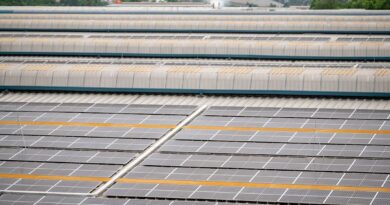
GAIL to Invest ₹3,800 Crore in 700 MW Captive Solar Projects
⚡ Quick Read
- What happened: GAIL (India) Ltd has approved a ₹3,800 crore investment for 700 MW of captive solar capacity, including 572 MWh of BESS, across Uttar Pradesh and Maharashtra.
- Why it matters: This move signals a major shift for large industrial players toward self-reliance in renewable energy, creating significant EPC opportunities for integrated solar-storage systems.
- Watch: The progress of the 600 MW Jhansi project and the subsequent impact on GAIL’s total renewable portfolio, which is set to exceed 1,000 MW.
Background and Context
GAIL (India) Ltd, the nation’s leading natural gas utility, has officially approved a strategic expansion into renewable energy to support its industrial operations. By investing ₹3,800 crore into captive solar power infrastructure, the company aims to reduce its carbon footprint and secure a stable, cost-effective energy supply for its petrochemical assets. This initiative marks a significant milestone in GAIL’s transition, as it seeks to scale its renewable energy portfolio from the current 147 MW to over 1,000 MW upon the successful commissioning of these new assets.
Key Details
The expansion plan is divided into two primary geographical clusters. The largest component involves a 600 MW solar power project located at the TUSCO Solar Park in Jhansi, Uttar Pradesh. This facility will be integrated with a 550 MWh battery energy storage system (BESS) to ensure consistent power supply for GAIL’s Petrochemical Plant at Pata in the Auraiya district. Additionally, the company is developing a 100 MW solar power project in the Chhatrapati Sambhaji Nagar district of Maharashtra. This project will feature a 22 MWh BESS and is designed to meet the captive energy requirements of GAIL’s PDH-PP Plant located at Usar in the Raigad district.
What This Means for EPCs and Developers
For EPC contractors and renewable energy developers, this announcement represents a substantial opportunity in the industrial captive power segment. The inclusion of large-scale BESS—totaling 572 MWh across both sites—indicates a growing market preference for round-the-clock or dispatchable renewable energy solutions. Contractors with expertise in high-voltage transmission, BESS integration, and large-scale solar park development are well-positioned to participate in the upcoming execution phases of these projects. The scale of the investment suggests that GAIL will likely issue significant sub-contracts for civil works, module procurement, and storage system integration.
What Happens Next
With the board approval secured, the focus now shifts to project tendering and the commencement of site development. As GAIL accelerates its transition toward green energy, the company is expected to set a benchmark for other public sector undertakings (PSUs) looking to decarbonize their industrial processes. This development reflects the broader trend in the India renewable energy sector, where major industrial players are increasingly prioritizing captive renewable generation to mitigate grid volatility and reduce long-term operational costs.